
The Mega-Solar Problem in Japan and Policy Responses
2/1 2026
Author: Naoko Hamashima
For Japan, a nation with limited readily available resources and heavy dependence on overseas fossil fuels for most of its energy, securing domestic energy sources, including renewable energy, is critically important from the perspectives of curbing national wealth outflow and ensuring energy security. Against the backdrop of anticipated increases in electricity demand driven by the progress of DX and GX, securing decarbonized power sources is essential for strengthening industrial competitiveness. In this context, it is of utmost importance to maximize the utilization of renewable energy, nuclear power, and other sources.
Regarding renewable energy, solar power generation has expanded rapidly since the introduction of the FIT system in 2012. However, this has also given rise to diverse concerns within local communities regarding the natural environment, safety, and landscape. Japan's circumstances—with its limited land area, 75% of which is mountainous—further exacerbate this issue.
For example, while the recent case in Kushiro City particularly highlighted friction between businesses and the city and local experts, the number of solar power installations in the four municipalities surrounding the Kushiro Marshes is shown in Figure 1.
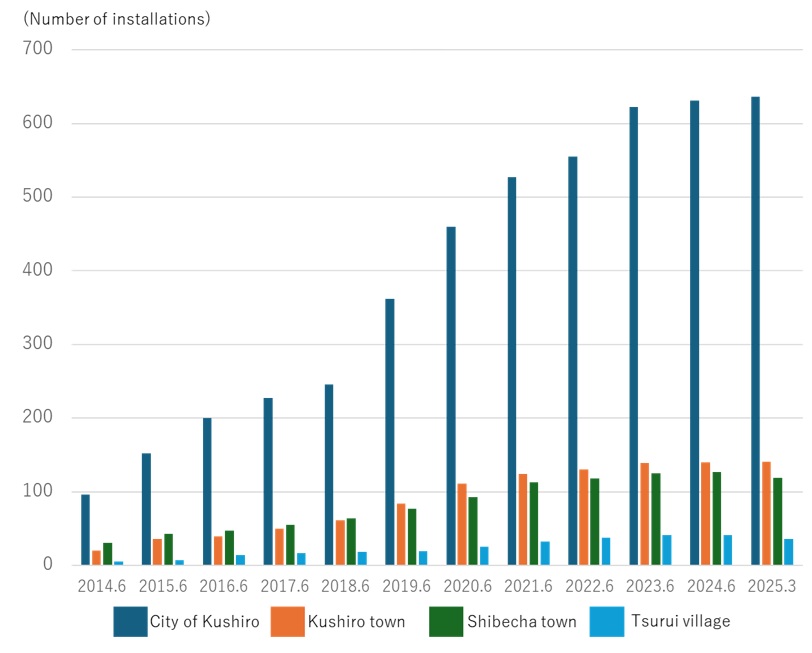
* Number of installations introduced under Act on Special Measures Concerning Procurement of Electricity from Renewable Energy Sources by Electricity Utilities (Source: Agency for Natural Resources and Energy, Act on Special Measures for the Promotion of the Use of Renewable Energy Electricity Information Disclosure Website)
In 2023, the Ministry of Internal Affairs and Communications conducted a survey of municipalities regarding local disputes surrounding solar power generation facilities. The survey found that nearly 20% of responding local governments reported unresolved disputes or similar issues.
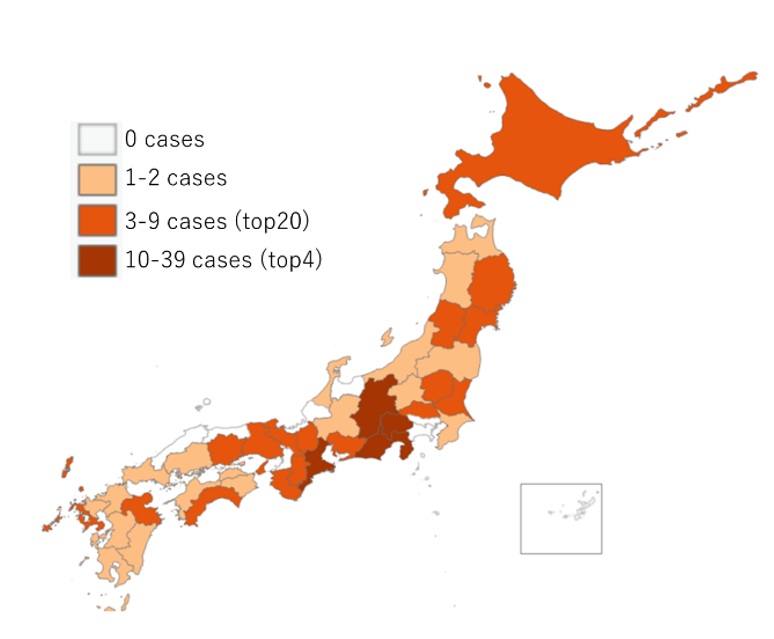
The Regional Renewable Energy Research Group (2025) identified 198 conflicts related to solar power generation through a survey of newspaper articles on regional disputes, as of February 2024 (Figure2). The main factors were concerns about natural disasters (112 cases), concerns about landscape deterioration (88 cases), impact on living environments (61 cases), impact on natural environment conservation (61 cases), and other factors (45 cases).
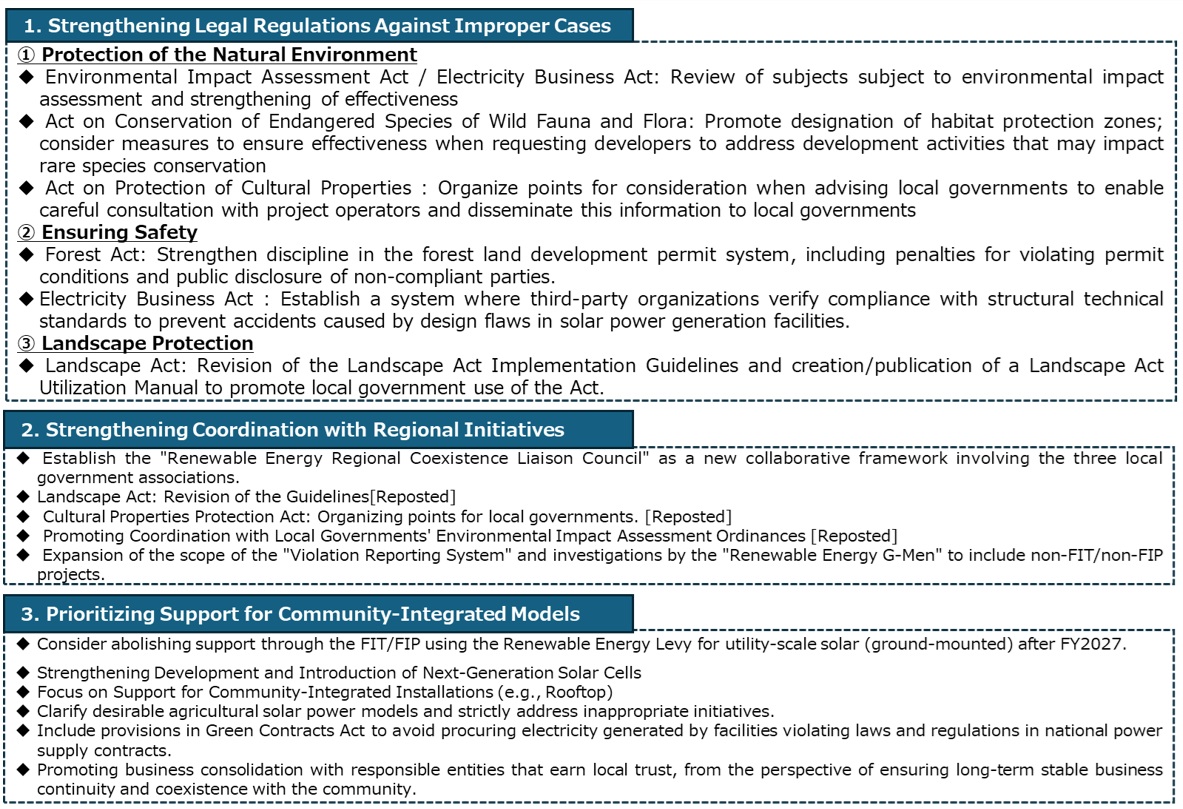
In response to these circumstances, the Japanese government compiled “Policy Package for Large-Scale Solar Power Generation Projects (Mega Solar),” consisting of three pillars: “Strengthening legal regulations against inappropriate incidents,” “Enhancing collaboration with local initiatives,” and “Prioritizing support for community-integrated models.” (December 23, 2025 Decision by the Interministerial Meeting on Large-Scale Solar Power Generation Projects).
In compiling the package, a liaison council composed of relevant ministries and agencies was established to conduct a comprehensive review of related laws and regulations, including land development, ensuring the safety of electrical equipment, and preserving living environments, natural environments, and landscapes. This review identified areas requiring further strengthening of legal regulations through institutional reform and areas requiring the creation of an environment to ensure effective and smooth implementation by local governments. This package of measures incorporates countermeasures addressing these issues.
Furthermore, from the perspective of promoting desirable projects that achieve coexistence with local communities, the package also addresses the need to review the nature of national support for solar power generation through tax systems and budgets. It states that, considering technological progress and the necessity of support, efforts will focus on promoting installation models that achieve coexistence with local communities and on next-generation solar cells such as perovskite solar cells.
When introducing renewable energy, coexistence with local communities and consideration for the environment are fundamental prerequisites. Based on this policy package, it is expected that desirable projects achieving coexistence with local communities will be promoted. Furthermore, it is expected that local governments with legal authority and the national government will collaborate to take strict measures against inappropriate projects.
In the future, it will be desirable to verify whether the renewable energy sources adopted by companies are generated in a manner that promotes coexistence with local communities, and failure to do so will likely be considered a risk.
* The proper nouns related to the countermeasure package in this paper are provisional translations by the author.
References
Agency for Natural Resources and Energy “Act on Special Measures for the Promotion of the Use of Renewable Energy Electricity Information Disclosure Website” https://www.fit-portal.go.jp/PublicInfoSummary (Japanese only, Viewed on January 17 2025.)
Cabinet Secretariat, the Interministerial Meeting on Large-Scale Solar Power Generation Projects https://www.cas.go.jp/jp/seisaku/megasolar/index.html (Japanese only, Viewed on January 17 2025.)
Ministry of Internal Affairs and Communications (2024) “Survey on the Introduction of Photovoltaic Power Generation Equipment, etc.
Regional Renewable Energy Research Group (2025) “Checklist for Regionally Desirable Renewable Energy: Solar & Onshore Wind ver.1.0” https://www.isep.or.jp/archives/library/15027 (Japanese only, Viewed on January 17 2025.)